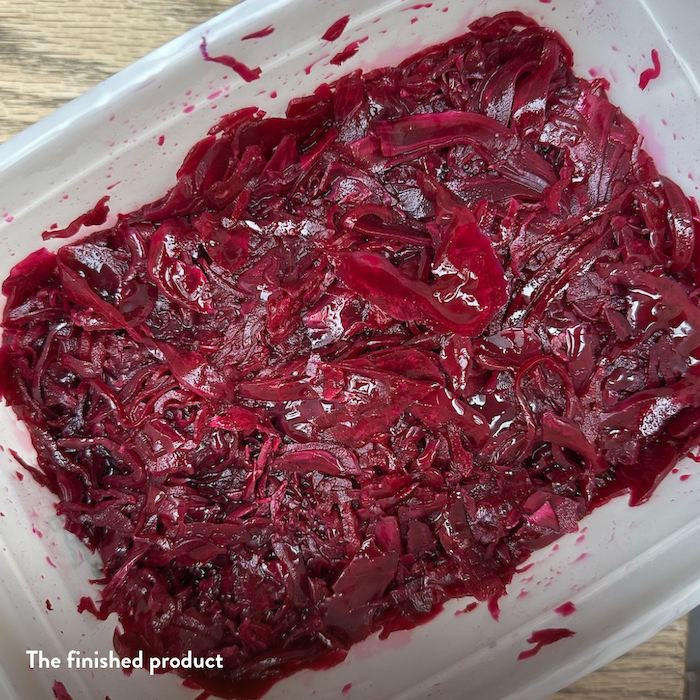
One thing you’ll always find on the menu at the Duke is our famous sauerkraut. Full of gut-friendly probiotics, vitamins A & D, fibre and nutrients, its deliciousness is matched only by its health benefits.
We’ve been fermenting beautiful red cabbage in house every week for years. We serve it braised on our roast dinner to cut through the richness, crisp and fresh in our beef and taleggio sandwich - and in many more ways.
The Duke Organic Saurkraut:
We make a big batch of saurkraut once a month, but you might want to make slightly smaller quantities at home, or else you might suffer from intense cabbage fatigue.
Ingredients:
20g of salt (non-iodised, like sea salt) per kilo of shredded red cabbage (you can also use white cabbage, or any veg that takes your fancy - we use cauliflower sometimes).
1 gram of whole spices (we use a mixture of caraway and juniper) per kilo of shredded cabbage.
Method:
Lightly toast your whole spices in a pan over a medium head until they smell fragrant and warm.
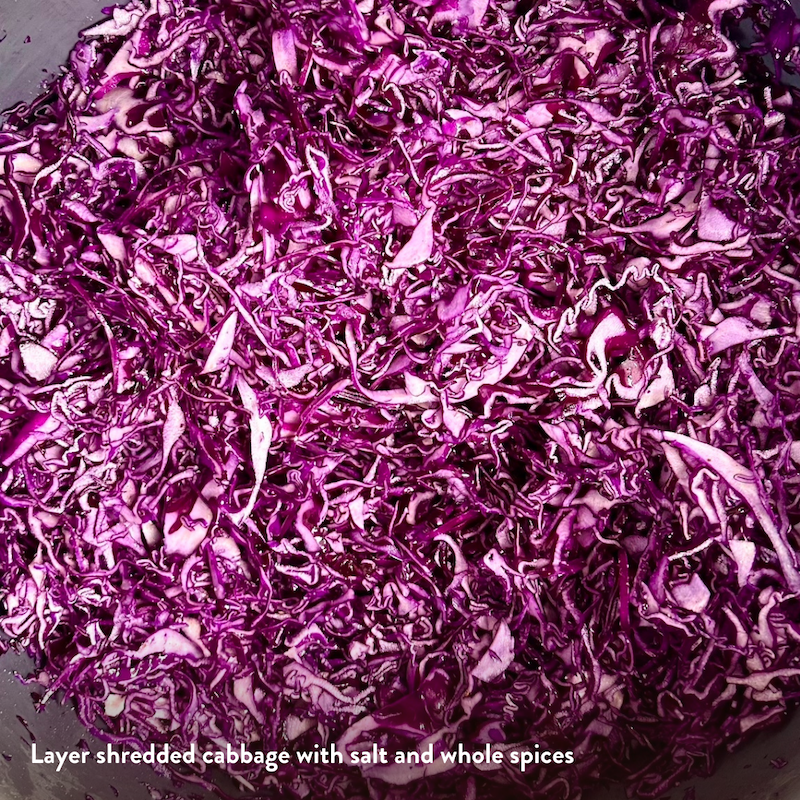
Wash your cabbage and shred finely.
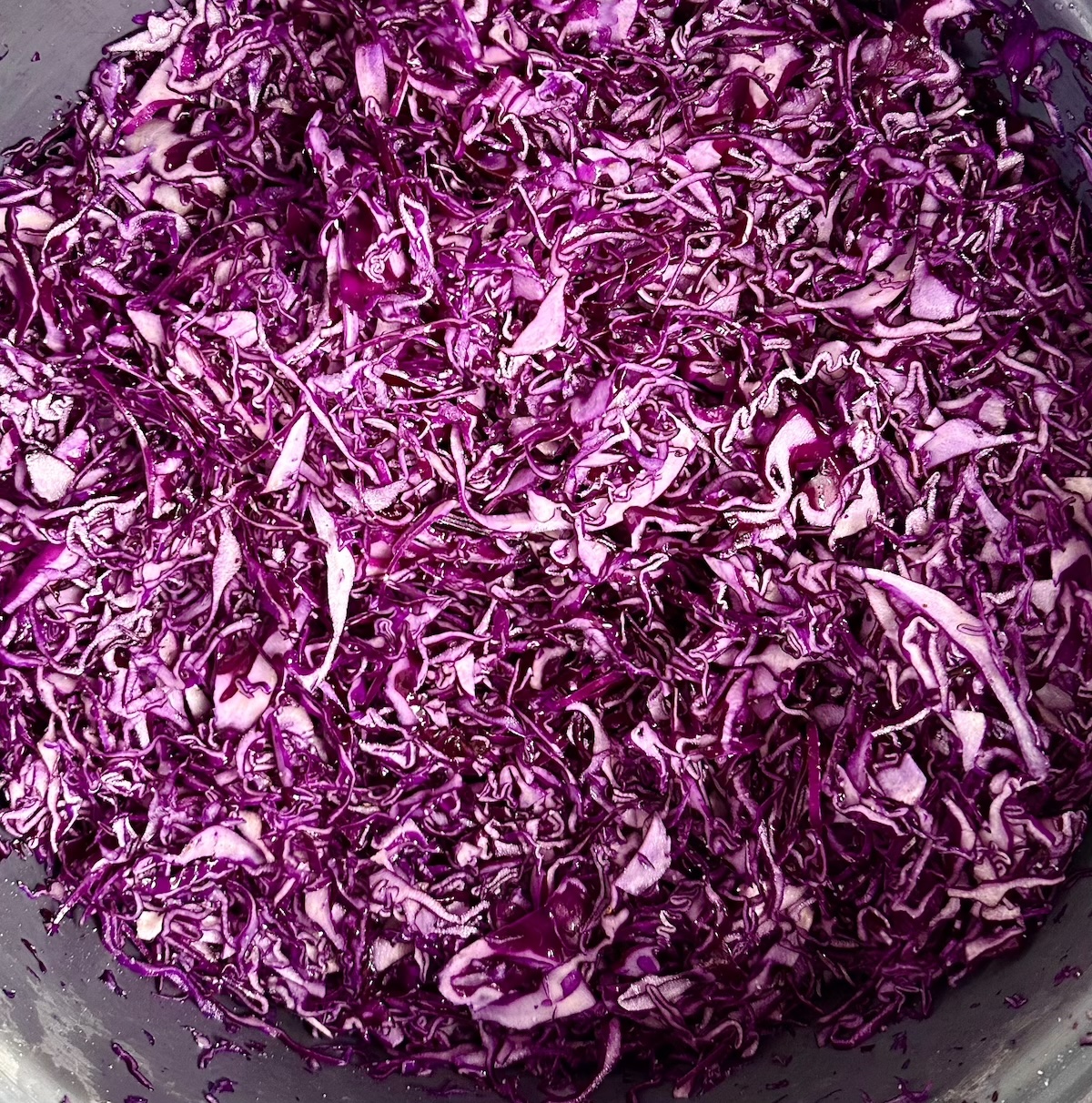
In a large sealable Kilner jar, Tupperware or fermentation jar - layer your shredded cabbage with the salt and the whole spices.
Finish with a final layer of salt and spices and squeeze the cabbage down so it is compact and the brine it produces covers the top.
Ensure the cabbage is submerged under the liquid it produces (you’ll be surprised how much comes out) and this will prevent it from spoiling as it ferments.
Leave in a coolish dry area for a week (burp it once every couple of days) and look out for signs of fermentation.
We use a PH testing kit to test the PH after 7 days, which tells us if it has achieved the correct acidity. However, you can test your sauerkraut in a few ways:
- Bubbles. If you can see bubbles popping at the top of your ferment when you open the lid, this means the bacteria is doing its thing and fermenting away.
- Taste. If your saurkraut tastes (wait for it) sour, then this means the PH is now acidic, and fermenting nicely.
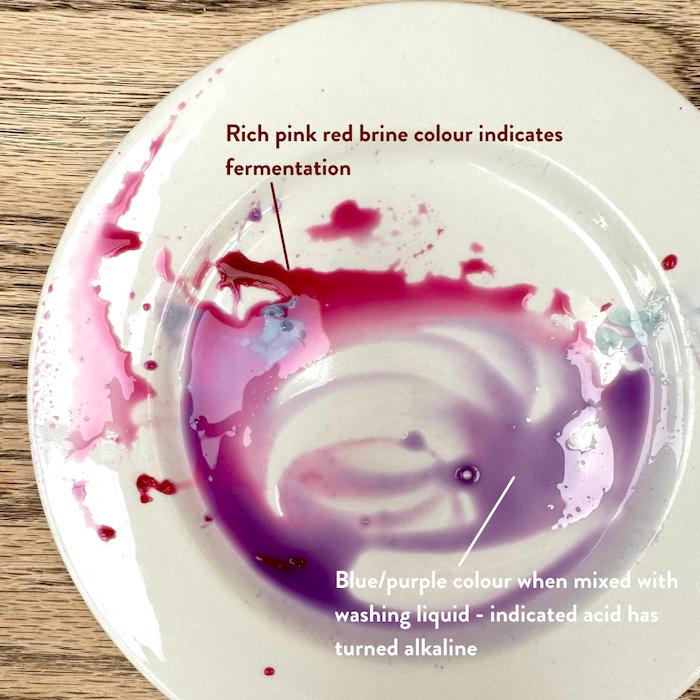
- Colour. Once the colour has turned from the blueish-purple of the raw cabbage to a rich warm pink/red - this means it is no longer alkaline. You can test this by taking a spoon of the brine and put it onto a white plate, and adding a little washing up liquid to it. The liquid turns acid alkaline, so the rich pink brine will turn back to a bluish purple.
Now enjoy! Your saurkraut can be stored for up to three months in the fridge, and eaten with anything from cured meats to toasties. Delicious.